What Is an Email List Scrubbing Service and How Does It Work?

Email list scrubbing is a crucial process for marketers aiming to maintain effective communication with their audience. It involves the systematic cleaning of email lists to remove invalid, duplicate, or inactive addresses, ensuring that marketing campaigns reach the intended recipients. This article will delve into the mechanics of email list scrubbing, its importance for marketers, and how it enhances email deliverability. Many businesses struggle with low engagement rates and high bounce rates due to poor list hygiene. By implementing an email list scrubbing service, marketers can significantly improve their sender reputation and overall campaign performance. We will explore the scrubbing process, its benefits, and how it integrates with popular CRM systems.
What Is Email List Scrubbing and Why Is It Essential for Marketers?
Email list scrubbing refers to the process of cleaning an email list to ensure that it contains only valid and active email addresses. This practice is essential for marketers as it helps maintain a positive sender reputation, which is crucial for successful email marketing campaigns. A clean email list leads to higher engagement rates, as messages are more likely to reach real users who are interested in the content. Additionally, scrubbing helps prevent issues such as being marked as spam, which can severely impact deliverability.
For marketers, the importance of email list scrubbing cannot be overstated. It not only protects the sender's reputation but also enhances the effectiveness of email marketing efforts. By ensuring that only valid addresses are included, marketers can focus their resources on engaging with their audience rather than dealing with the fallout of undeliverable emails. If you're looking for a reliable solution, consider ListDefender for your email list cleaning needs.
How Does Email List Cleaning Remove Invalid Addresses?
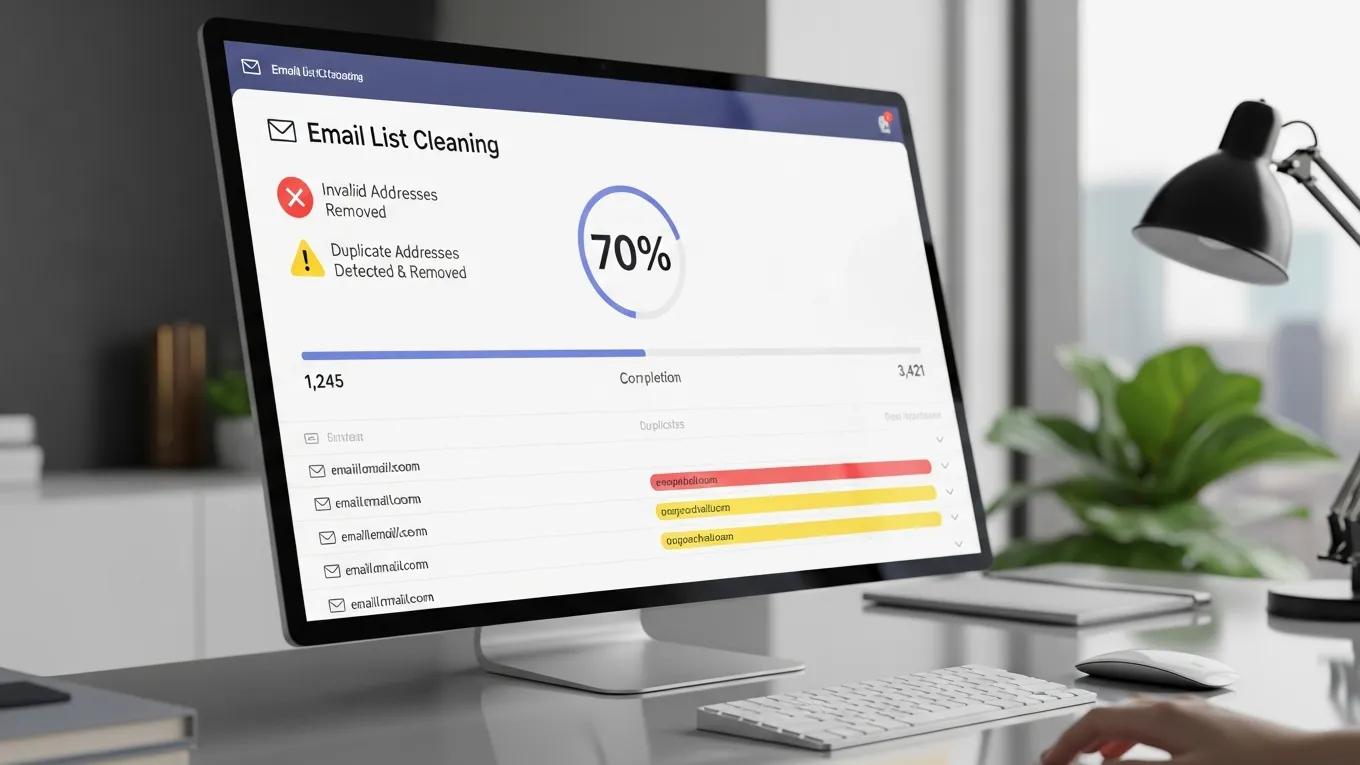
Email list cleaning involves several steps to identify and remove invalid and duplicate addresses. The process typically starts with the validation of email addresses, which checks for correct syntax and domain existence. Invalid addresses, such as those with typos or non-existent domains, are flagged for removal. Continuous monitoring of the email list is also essential, as new invalid addresses can emerge over time. By regularly scrubbing the list, marketers can maintain a high-quality database that supports effective communication.
What Are the Common Risks of Neglecting Email List Hygiene?
Neglecting email list hygiene can lead to several significant risks for marketers. One of the most pressing issues is a weakened sender reputation, which can result from high bounce rates and spam complaints. When emails are frequently undeliverable, email service providers may flag the sender as untrustworthy, leading to lower deliverability rates.
Moreover, poor list hygiene can increase bounce rates, which not only affects the immediate campaign but can also have long-term consequences on the sender's reputation. Lower engagement rates are another risk, as emails sent to invalid addresses do not contribute to meaningful interactions with the audience. Ultimately, neglecting email list hygiene can hinder a marketer's ability to connect with their audience effectively.
How Does the Email List Scrubbing Process Work?
The email list scrubbing process involves several technical steps designed to ensure the accuracy and validity of email addresses. This process typically includes syntax validation, domain validation, and spam trap detection.
What Are the Technical Steps: Syntax, Domain, and Spam Trap Validation?
- Syntax Validation: This step checks the format of the email addresses to ensure they conform to standard email formatting rules. Invalid formats are flagged for removal.
- Domain Validation: This involves verifying that the domain of the email address exists and is capable of receiving emails. Domains that do not exist are eliminated from the list.
- Spam Trap Detection: Identifying and removing spam traps is crucial, as these are email addresses set up to catch spammers. Sending emails to these addresses can severely damage a sender's reputation.
By implementing these technical steps, marketers can ensure that their email lists are clean and effective.
How Does Bounce Removal Enhance Campaign Performance?
Bounce removal is a critical aspect of the email list scrubbing process. By eliminating addresses that result in hard bounces—emails that cannot be delivered due to permanent reasons—marketers can significantly enhance their campaign performance.
Removing bounces helps improve sender reputation, as email service providers monitor bounce rates closely. A lower bounce rate indicates a healthier email list, which can lead to better deliverability and higher engagement rates. Additionally, focusing on valid addresses allows marketers to allocate their resources more effectively, targeting engaged users who are likely to respond positively to their campaigns.
What Are the Benefits of Using an Email List Verification Service?

Using an email list verification service offers several key benefits for marketers. These services help ensure that email lists are accurate and up-to-date, which is essential for effective communication.
- Improved Email Deliverability: By removing invalid addresses, marketers can enhance their overall deliverability rates, ensuring that their messages reach the intended recipients.
- Reduced Bounce Rates: Regular verification helps minimize bounce rates, which can protect the sender's reputation and improve engagement metrics.
- Enhanced Sender Reputation: A clean email list contributes to a positive sender reputation, which is crucial for maintaining high deliverability rates over time.
These benefits highlight the importance of integrating email list verification services into marketing strategies. To understand the pricing, you can check ListDefender pricing.
How Does List Cleaning Improve Email Deliverability and Sender Reputation?
List cleaning plays a vital role in improving email deliverability and sender reputation. By ensuring that only valid and engaged email addresses are included in the list, marketers can significantly enhance their chances of successful email delivery.
A clean list reduces the likelihood of being marked as spam, which is a common issue for marketers with poor list hygiene. Additionally, maintaining a positive sender reputation is essential for long-term success in email marketing. By regularly cleaning their lists, marketers can foster trust with email service providers and improve their overall campaign performance.
What Is the Impact on Bounce Rates and ROI for Small Businesses?
For small businesses, the impact of bounce rates on return on investment (ROI) can be substantial. High bounce rates can lead to wasted resources, as marketing efforts are directed toward invalid addresses that do not yield any returns.
By implementing effective email list scrubbing practices, small businesses can reduce bounce rates and improve their ROI. A cleaner email list means that marketing campaigns are more likely to reach engaged users, leading to higher conversion rates and better overall performance. This focus on list hygiene is essential for maximizing the effectiveness of marketing budgets.
How Can Email List Scrubbing Integrate with Popular CRMs?
Integrating email list scrubbing with popular Customer Relationship Management (CRM) systems can streamline the process of maintaining list hygiene. Many CRMs offer built-in tools, albeit limited or basic, for email validation and list cleaning.
Which Platforms Support Seamless Integration?: Keap, HighLevel, ActiveCampaign, ClickFunnels, Kit
- Keap: Offers automated email validation features to ensure that lists remain clean and up-to-date.
- HighLevel: Provides tools for managing email lists and integrating scrubbing services directly into the platform.
- ActiveCampaign: Includes email validation features that help maintain list hygiene and improve deliverability.
- ClickFunnels: Connects directly to your funnels and order forms to validate email addresses in real time, blocking bad data before it ever hits your list.
- Kit: Integrates with your creator workflows and forms to automatically scrub subscribers as they come in, protecting your sender reputation as your audience grows.
- Others: Most CRM and email marketing systems allow users to download the list in .csv format, which can be uploaded to a list cleaning and validation service.
These integrations allow marketers to automate the scrubbing process, saving time and resources while ensuring that their email lists remain effective.
Interested in seeing how it works? You can access a ListDefender demo to explore its features.
What Are the Steps to Connect ListDefender with Your Email Marketing System?
- Choose Your Platform: Identify the email marketing platform you are using, such as Keap, HighLevel, ActiveCampaign, ClickFunnels, or Kit.
- Sign Up for ListDefender: Create an account with ListDefender to access their email scrubbing services.
- Integration Setup: Follow the provided instructions to integrate ListDefender with your chosen email marketing system, ensuring that your lists are automatically scrubbed.
By following these steps, marketers can enhance their email marketing efforts through effective list hygiene.
What Are the Pricing Models and Plans for Email List Cleaning Services?
Email list cleaning services typically offer various pricing models and plans to accommodate different business needs. Common options include:
- Essentials Plan: A basic plan that covers form protection for small businesses that stops bad emails at the front door.
- Complete Plan: A more comprehensive plan that includes form protection, advanced list cleaning and validation, and email engagement management.
- Agency Program: Tailored for marketing agencies, this program offers bulk pricing and additional features for managing multiple clients.
These pricing models allow businesses to choose a plan that best fits their needs and budget.
How Does Transparent Pricing Benefit Small Business Marketers?
Transparent pricing is crucial for small business marketers as it allows for better budgeting and financial planning. Knowing the costs associated with email list cleaning services helps businesses allocate resources effectively and avoid unexpected expenses.
Additionally, transparent pricing often includes clear descriptions of the services provided, ensuring that marketers understand what they are paying for. This clarity can lead to more informed decisions and better overall outcomes for email marketing campaigns.
Where Can You Access Demos and Trial Experiences?
Many email list cleaning services, including ListDefender, offer demos and trial experiences to help potential customers understand the value of their services. Accessing these demos typically involves:
- Scheduling Demos: Interested users can schedule a demo to see the service in action and ask questions.
- Trial Limitations: Some services may offer limited-time trials to allow users to test the features before committing to a subscription.
- Accessing Demo Experiences: Users can often find demo experiences directly on the service's website, providing a hands-on look at the platform's capabilities.
These opportunities allow marketers to evaluate the effectiveness of email list cleaning services before making a financial commitment.
What Are the Best Practices for Maintaining Email List Hygiene?
Maintaining email list hygiene is an ongoing process that requires regular attention. Here are some best practices to consider:
- Regular Cleaning: Schedule regular scrubbing sessions to ensure that your email list remains up-to-date and valid.
- Validation Methods: Utilize automated validation tools to streamline the process and reduce manual effort.
- Engagement Tracking: Monitor engagement metrics to identify inactive users and remove them from your list.
By following these best practices, marketers can maintain a high-quality email list that supports effective communication.
How Often Should You Scrub Your Email List for Optimal Results?
For optimal results, it is recommended to scrub your email list at least once every three to six months. This frequency allows marketers to keep their lists current and remove any invalid or inactive addresses.
Additionally, performing scrubbing before major campaigns can help ensure that messages reach engaged users, maximizing the effectiveness of marketing efforts. Regular scrubbing is essential for maintaining a healthy email list and achieving better deliverability rates.
Finally, ongoing scrubbing of new subscribers or email list opt-ins is essential to maintain a high deliverability rate and sender reputation.
What Tools and Metrics Help Monitor List Quality Over Time?
Monitoring list quality over time is crucial for maintaining effective email marketing. Key performance indicators (KPIs) to consider include:
- Bounce Rates: Track the percentage of emails that bounce to identify issues with list quality.
- Engagement Metrics: Monitor open and click rates to assess how well your audience is responding to your emails.
- Validation Tools: Utilize email validation tools to regularly check the accuracy of your email list.
By keeping an eye on these metrics, marketers can make informed decisions about their email list hygiene practices and ensure ongoing success in their campaigns.
Ready to get started? Login to ListDefender and begin improving your email list hygiene today.